How to Communicate Effectively with Guests in Hospitality
Effective communication is one of the most important skills in hospitality. Every conversation with a guest can influence how they feel about the service, the team, and the business as a whole.
Good hospitality communication is about more than simply being polite. Employees need to listen carefully, explain information clearly, recognise individual guest needs, and remain professional even when situations become challenging.
Here are practical ways hospitality professionals can communicate more effectively with guests and create better experiences.
1. Give Guests Your Full Attention
Good communication begins with being present.
When speaking with a guest, avoid appearing distracted or rushing the conversation. Make appropriate eye contact, listen carefully, and give the guest enough time to explain what they need.
Giving someone your full attention demonstrates respect and helps ensure important information is not missed.
2. Use Clear and Simple Language
Hospitality professionals often understand terminology, procedures, and policies that guests may not be familiar with.
Avoid unnecessary jargon and explain information in a straightforward way. Instructions, directions, timings, prices, and policies should be communicated clearly so guests know exactly what to expect.
Clear communication reduces misunderstandings and gives guests greater confidence in the service they are receiving.
3. Practise Active Listening
Listening is just as important as speaking.
Active listening means concentrating on what the guest is saying rather than simply waiting for an opportunity to respond. Staff should avoid interrupting and ask appropriate questions when clarification is needed.
Repeating or confirming important details can also help prevent mistakes.
For example, confirming a reservation time, dietary requirement, room request, or other preference reassures the guest that their needs have been understood.
4. Pay Attention to Tone and Body Language
Communication is not limited to words.
Tone of voice, facial expressions, posture, gestures, and eye contact can all influence how a message is received. A helpful sentence delivered with an impatient tone can still leave a negative impression.
Hospitality professionals should aim to appear approachable, calm, confident, and attentive.
Positive body language helps reinforce the message that the guest is welcome and that their needs matter.
5. Personalise the Conversation
Small personal touches can make communication feel warmer and more genuine.
Using a guest’s name when appropriate, remembering a returning guest’s preferences, or adapting the conversation to their particular situation can help create a stronger connection.
The goal is not to follow a script word for word. Staff should communicate naturally while maintaining professional service standards.
6. Ask the Right Questions
Sometimes guests may not explain exactly what they need.
Open questions can help employees understand the situation more clearly. Instead of immediately making assumptions, staff can ask questions that allow the guest to provide more information.
At other times, a simple closed question may be useful for confirming a specific detail.
Knowing when and how to ask questions helps employees provide more accurate and personalised assistance.
7. Communicate Proactively
Guests should not always have to ask what is happening.
If there is a delay, change, problem, or important piece of information, communicate it as early as possible.
For example, if a service is delayed, acknowledging the delay and providing an realistic update is usually better than leaving the guest wondering what is happening.
Proactive communication helps manage expectations and demonstrates professionalism.
8. Stay Calm During Difficult Conversations
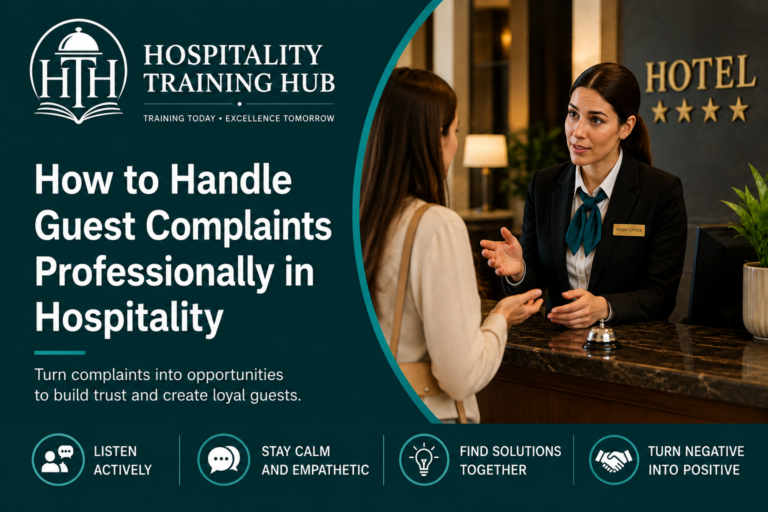
Hospitality professionals will occasionally encounter frustrated, disappointed, or angry guests.
In these situations, remaining calm is essential.
Avoid becoming defensive or matching the guest’s emotional tone. Listen carefully, acknowledge the concern, and focus the conversation on what can be done to resolve the situation.
A calm and professional response can prevent a difficult interaction from escalating.
9. Adapt Your Communication to the Guest
Every guest is different.
Some guests prefer detailed explanations, while others want quick and direct information. Language differences, accessibility requirements, cultural expectations, age, and the circumstances of the interaction can also affect how communication should be approached.
Effective hospitality professionals recognise these differences and adjust their communication while continuing to treat every guest with respect.
10. Finish the Interaction Positively
The end of an interaction matters just as much as the beginning.
Before finishing a conversation, make sure the guest has received the information or assistance they needed. Where appropriate, ask whether there is anything else you can help with.
A friendly closing such as thanking the guest or wishing them an enjoyable stay, meal, or visit helps leave a positive final impression.
Better Communication Creates Better Guest Experiences
Strong communication skills help hospitality professionals build trust, prevent misunderstandings, resolve problems, and provide more personalised service.
When employees listen actively, communicate clearly, remain professional under pressure, and adapt to individual guests, everyday interactions become opportunities to strengthen the overall guest experience.
Communication skills improve with practice. Regular training can help hospitality teams become more confident and consistent when interacting with guests in a wide range of situations.
Ready to Strengthen Your Hospitality Communication Skills?
Explore our practical hospitality training courses designed to help hospitality professionals and teams build confidence, strengthen customer service skills, and deliver consistently professional guest experiences.